Research conducted by Toni Shi (MA, Art and Design Education, 2022)
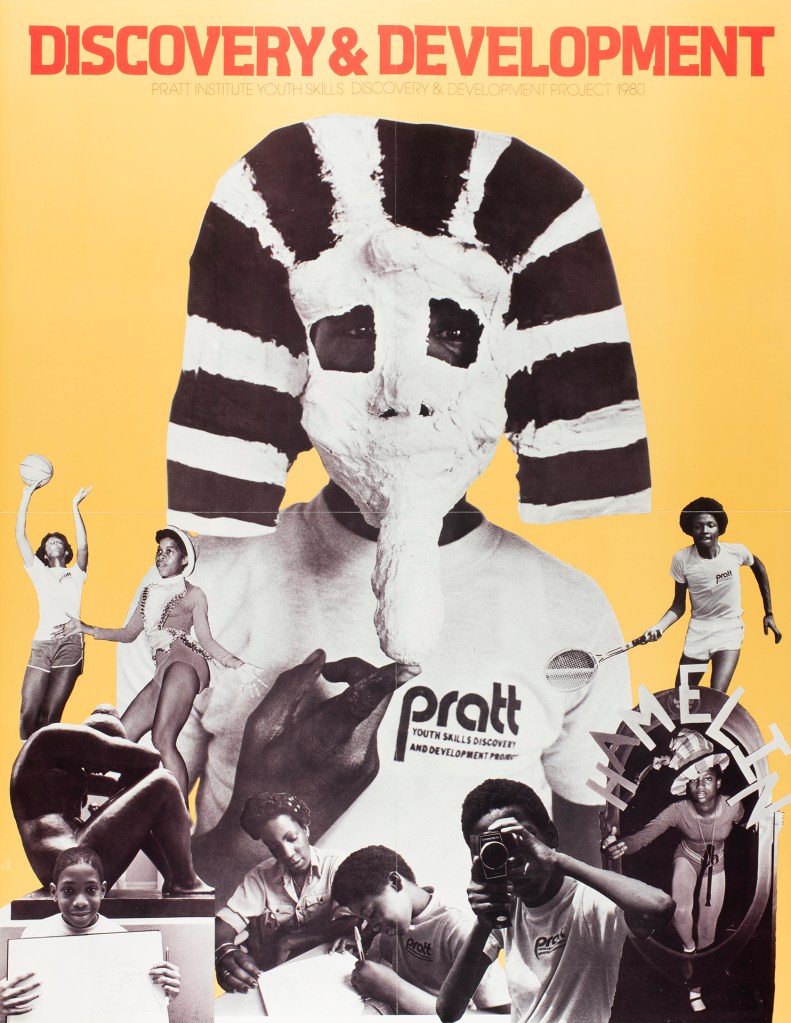
Pratt Institute’s Youth Skills Discovery and Development Program
- Started in Summer 1973 and ended in 2002
- Offered an enriched creative learning experience to more than 6000 inner-city youngsters between ages 8 and 15
- Used extensive resources of Pratt’s Brooklyn campus: distinguished faculty, talented students
- 6 weeks of intensive workshop/study programming to local boys or girls who demonstrate skill/potential in the visual or performing arts or have special needs in the area of reading skill or exceptional abilities in athletics or computer skills
- Operated Mon to Fri 8:30 to 3:30 pm and until 5 pm on those days where off-campus activities were planned
Timeline of the Program Through the Decade: 1973-83
The initiation of the Youth Skills Discovery and Development Program coincided with the opening of Bedford-Stuyvesant Restoration Corporation’s (BSRC) “Restoration Plaza”. The BSRC invested in the Bed Stuyvesant neighborhood, bringing job placements and arts programs. The timeline below maps out the background context for the decade of 1973 to 1983 and the program changes that were directly influenced by current events. Overall, research on the student and instructor experience in the program is based on an analysis of interviews conducted for the program brochures, communication among administrators in administrative memos, and an interview with a former student.
Highlights
Summers 1976, 1977, 1983, and 2000 each have a distinct focus. The following brief descriptions of each summer make connections between the information and overall student experiences.
Summer 1976: Participant Experiences
Taken from the ’76 program brochure are several interviews of students and an instructor. These active participants talked about their experience of partaking in the program, mentioning their growth and their classmates and friends. This information gives insight into their thoughts on the program and what is provided.
- Student Denise Jackson (12 YO) walks us through his thought process on the process of interviewing others. His last statement in his excerpt infers positive feelings towards the program and that to him it is a program worth attending again.
- Brian Cole (11 YO) talks about a friend who is also attending the program and how she is fond of the drama class despite not having chosen the class initially. This shows the opportunity the program provides, allowing students to take courses in areas they may not have been exposed to or are not readily able to access before. The student Ann Richardson came to enjoy acting after taking the drama course, allowing her to explore another potential area of interest. Brian also mentions how she liked her fellow peers in the course, giving us insight as to how the program allowed for the development of friendships and positive social impacts.
- Miss Jackson, an instructor mentions a student in the drawing class. It is evident through her description of his work process that she has closely observed and cares for the student. This gives us an idea of what the instructors see in their classes and how invested they are in their students.
Summer 1977: Program Expansion
CETA (Comprehensive Employment and Training Act) was passed along with the YEDPA – Youth employment and demonstration Project Acts.
- Dealt with chronic problems of high youth unemployment
- Expanded and coordinated programs of career development with employment and training opportunities, designed to help ease youth into the labor force after successful pre-employment, education, or job training skills and to sustain their success in the world of work.
- Directly impacted the program as in following years:
- Pratt students/ Pratt Graduates were hired as Assistant Instructors/Instructors and other students were hired as teacher aides or paraprofessional apprentices (’82) through youth employment programs
- Expanded the YSD program as an opportunity for a wider range of adolescents and young adults, and allowed it to grow beyond a 6-week summer curriculum for children ages 8 – 15
- With more employment and program expansion, more was offered – this year courses in ceramics, printmaking, sculpture, and filmmaking, and advanced art was offered for the first time

Summer 1983: In Face of Challenges
Through administrative correspondence, some challenges arose during the 10th summer of the program.
- Letters from Health Services to Student Affairs pinpoint issues within the program that had affected student safety and the use of Pratt’s space.
- Horace Williams reported the issues to External Affairs along with possible solutions in planning for the program. Through this communication, it is evident that the program is important to the institution and those running it.
- Horace Williams demonstrated forward-thinking decisions regarding the issues in focusing on how the program will proceed. His effort in troubleshooting and planning for implementing new program directions shows the desire for continuation and growth – a positive attitude that directly translated into the quality and experiences the program provided for its attendees.
![1983 letter from Marie Cotignola, R.N. to the Vice President of Student Affairs, John Klinzing, indicating concern about the "apparent lack of trained counselors involved in this [youth] program"](https://preservingactivism.org/wp-content/uploads/2023/03/208679-1-768x992-1.jpg?w=768)
Summer 2000: Towards the End of the Program
Ayan Gorsline is the daughter of Donna Gorsline, current Assistant to the Dean, School of Design at Pratt. Staff and faculty at Pratt were welcome to have their kids participate in the summer program. Pratt had reached out to the staff to let them know a summer program was being hosted and they wanted students of different ages and from different economic backgrounds to attend.
In her interview, Ayan recalls her past experience as a student in the program, noting the program aimed to give access to the facilities and was something like a day camp. She attended the program the summers of 2001 and 2002 when she was seven and eight years old. There were a few arts and craft classes that could be taken depending on interests. Counselors separated the students based on what they wanted to do and make sure access to supplies were granted. There were many field trips as well. Ayan remembers trips to a science museum in the Bronx, the pool on campus, the playground on Clinton-Washington as well as many casual day trips around the neighborhood. From the interview, Ayan mentioned how she enjoyed the experience and how she went on to attend pre-college in 2009 where she took classes in Pratt’s film department and made mini-movies.
The YSD Program had allowed students to explore film since 1977. The students at the time were excited to work with film and see what was available in the film department. This was before digital media and students would learn to splice film and make their own cassette tapes. The program allowed for exposure to certain media that allowed for students to have the experience they could bring to their future choices of study.
Historical Lens
It is important to consider the impact of the program through the lens of youth attendees; that’s where one can assess the effectiveness of it and bring to light perspectives that may be different from program administrators. This page looks into what the Youth Skills Project was – why it was established and how it affected those that attended it. The long-term goal is to track down some of the participants to conduct oral histories that will provide more details about their experiences in the program.
Sources Reviewed
- Brochures on Program
- Admin Letters
- Context Research – What was happening at the time
- Reviews on the program in newspapers/advertisements/etc.
- Interviews
 Preserving Activism